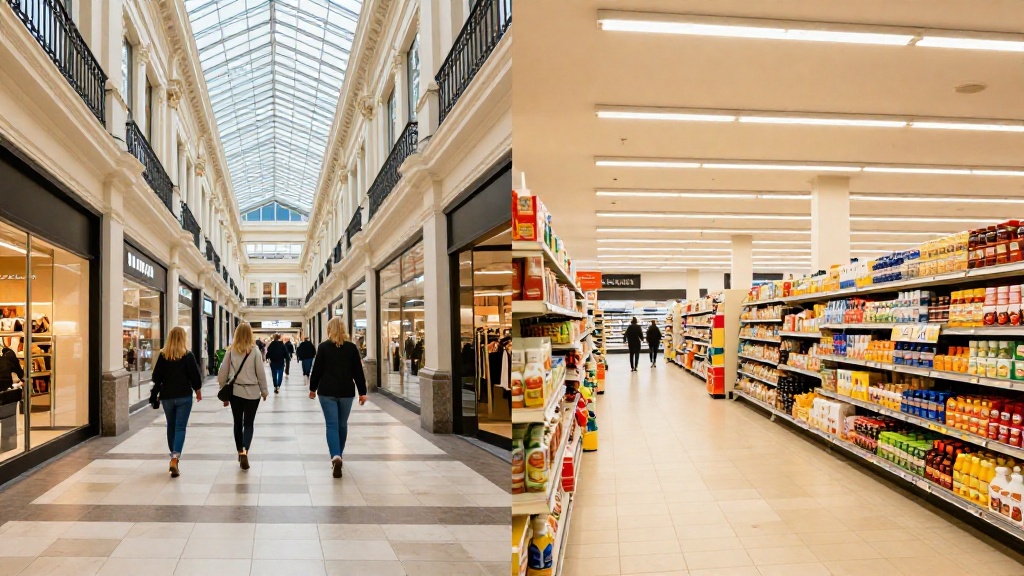
When it comes to shopping, consumers often find themselves deciding between two popular venues: a mall and a hypermarket.
But what exactly is the difference between these two retail establishments?
What is a Mall?
A mall is a large indoor shopping center that typically houses a variety of retail stores.
These stores include:
- Clothing outlets
- Electronics retailers
- Cosmetic shops
- Jewelry stores
- Food courts and restaurants
Additionally, malls often have entertainment options like:
- Movie theaters
- Play areas for children
- Bowling alleys
Malls are designed to provide a complete shopping and entertainment experience, making them a popular destination for families and social gatherings.
What is a Hypermarket?
On the other hand, a hypermarket is a super retail store that combines a grocery supermarket and a department store.
These establishments focus on selling a wide range of products under one roof, including:
- Groceries (fruits, vegetables, dairy, etc.)
- Household goods (cleaning supplies, furniture, etc.)
- Electronics
- Clothing
A hypermarket typically caters to the day-to-day needs of consumers by offering everything from food to clothing in one convenient location.
What Are the Key Differences Between Mall and Hypermarket?
1. What Types of Stores Are Available?
Malls usually focus on providing a variety of specialized retail outlets. For example:
- Fashion retailers
- Footwear stores
- Beauty salons
This variety allows shoppers to browse for diverse products and indulge in ways to enhance their lifestyle.
Hypermarkets, however, primarily concentrate on necessity items and everyday essentials. You might find products like:
- Fresh groceries
- Packaged foods
- Household cleaning products
2. How Do They Serve Their Customers?
Malls often encourage leisurely shopping experiences.
Visitors can wander, shop, eat, and enjoy entertainment.
They are designed for people to spend extended periods inside, often making a day out of the experience.
On the other hand, hypermarkets emphasize efficiency and convenience.
Shoppers usually visit these large stores with specific needs in mind, aiming to complete their shopping as quickly as possible.
3. What is the Layout Like?
A mall is characterized by:
- Wide walkways
- Multiple levels
- Individual store fronts facing the main corridor
Hypermarkets, conversely, tend to have a more warehouse-like layout. Here, you can expect:
- Large open spaces
- Clearly marked aisles
- Bulk-display sections
This difference in design influences how shoppers navigate these spaces.
4. What Are the Pricing Strategies?
Malls usually offer more specialized items, which can often lead to higher prices.
Luxury brands and specialty shops may dominate the offerings.
Conversely, hypermarkets focus on volume sales, which often translates to lower prices and bulk buying.
They’re renowned for price matching and discount promotions.
5. Are There Additional Services Offered?
Malls often provide:
- Personal shopping assistance
- Loyalty programs
- Gift cards
These services enhance the shopping experience and foster customer loyalty.
Hypermarkets can also offer services like:
- Pharmacies
- Photo printing
- Financial services
Yet, they primarily focus on providing practical services that meet everyday needs.
Which One is More Popular?
Popularity can depend on various factors such as location, consumer preferences, and marketing strategies.
Malls tend to do well in urban areas and developed cities where socializing becomes an integral part of shopping.
They often serve as social hubs.
On the contrary, hypermarkets are increasingly popular in suburban and rural areas.
Their one-stop-shop model attracts consumers who prefer the convenience of buying everything in a single trip.
What Are the Pros and Cons of Each?
Pros of Malls:
- Variety: A wide range of specialized shops.
- Entertainment: Options like theaters and arcades.
- Eating: Multiple dining choices.
Cons of Malls:
- Higher Prices: Often more expensive than hypermarkets.
- Time-Consuming: Shopping can take longer.
Pros of Hypermarkets:
- Convenience: One-stop shopping for everything.
- Lower Prices: Cost-effective shopping options.
Cons of Hypermarkets:
- Less Variety: Limited in specialized stores.
- Boring Environment: Quite often lacks the buzz of a mall.
When Should You Choose a Mall or a Hypermarket?
When to Go to a Mall:
- If you want a social experience.
- If you’re interested in exploring variety.
- When you wish to browse for leisure.
When to Go to a Hypermarket:
- When you have a specific shopping list.
- If you need to purchase groceries and household items.
- For quick, efficient shopping.
Conclusion: Mall vs Hypermarket
In a nutshell, the mall vs hypermarket debate boils down to the type of shopping experience you prefer.
Malls are perfect for leisurely browsing and social activities, while hypermarkets are designed for quick, satisfying, and efficient shopping.
Ultimately, both options have their advantages and cater to different consumer needs.
Next time you find yourself contemplating where to shop, consider your preferences and remember the key differences between a mall and a hypermarket.
Whether you opt for the bustling environment of a mall or the practicality of a hypermarket, you’re sure to find what you need. Happy shopping!