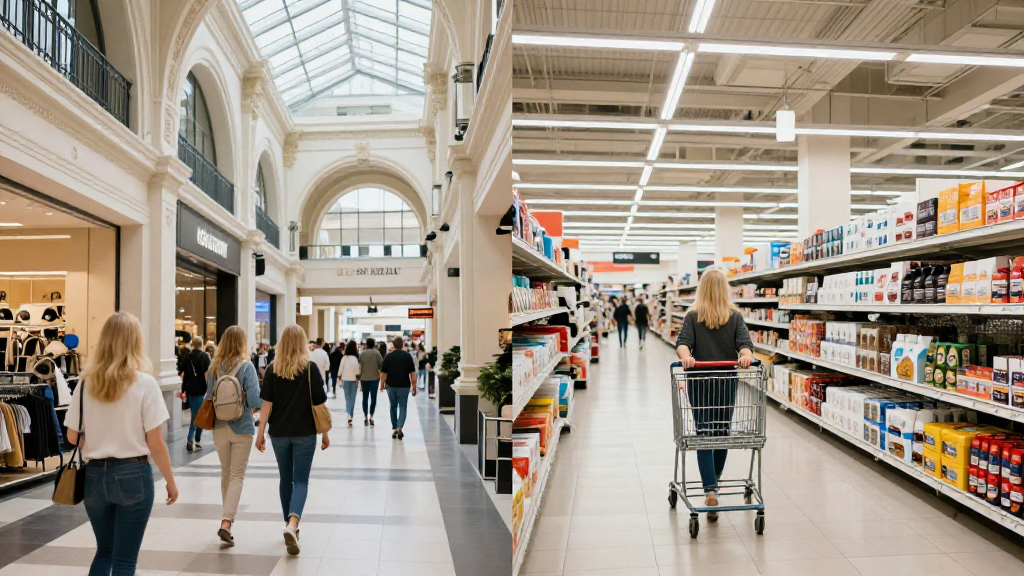
When comparing the mall vs big box store, it’s essential to understand the unique features that set these retail environments apart.
What Are the Key Features of a Mall?
Shopping malls are typically large indoor complexes that offer a variety of retail stores, entertainment options, and dining experiences all under one roof.
Here are some of the defining characteristics of a mall:
-
Diversity of Stores: Malls host a wide range of retailers, from high-end boutiques to everyday shops, providing consumers with numerous choices.
-
Entertainment Options: Many malls offer entertainment amenities such as movie theaters, arcades, and even indoor amusement parks, making them more than just shopping destinations.
-
Dining Experiences: Besides retail, malls often include a food court or sit-down dining restaurants, giving shoppers plenty of options to refuel during their shopping excursions.
-
Social Space: Malls are often social hubs where people gather to spend time together, meet friends, or enjoy live events.
-
Amenities for Shoppers: Amenities such as restrooms, lounges, and accessibility features enhance the shopping experience, making it comfortable and enjoyable.
In essence, a mall offers a holistic shopping experience that goes beyond just purchasing goods.
What Makes a Big Box Store Unique?
In contrast, a big box store is typically characterized by its large physical size and a specific focus on providing a certain type of merchandise at competitive prices.
The defining attributes include:
-
Limited Variety: Unlike malls, big box stores often specialize in a specific category of goods, such as electronics, home goods, or groceries.
-
Low Prices: Big box retailers aim to provide lower prices than traditional smaller retailers, often achieved through bulk purchasing and streamlined operations.
-
Simple Layout: The layout of a big box store tends to be straightforward, with items grouped by category, allowing for quick shopping experiences.
-
Fewer Services: While some big box stores may include grocery sections or small service areas, they typically lack the extensive amenities found in malls.
-
Focus on Necessities: Big box stores cater mainly to consumers looking for essential items rather than an entertainment or leisurely shopping experience.
In summary, while both malls and big box stores play significant roles in the retail landscape, they cater to distinct consumer needs and preferences.
How Do Malls and Big Box Stores Compare in Terms of Shopping Experience?
When evaluating mall vs big box store, the shopping experience is one of the most noticeable differences.
How Do Atmosphere and Ambiance Differ?
Malls generally offer a vibrant and lively atmosphere, often enhanced by music, decorative elements, and crowds of people.
This ambiance stimulates a more engaging shopping experience.
Conversely, big box stores often have a more utilitarian feel.
Shoppers usually experience:
- Less decor
- Wider aisles
- Bright fluorescent lighting
These elements enhance speed and utility over ambiance.
How Do Shopping Patterns Vary?
Shoppers at malls often allocate more time for browsing and socializing, attracting those who enjoy leisure shopping.
In contrast, big box store shoppers are usually purposeful in their shopping habits, aiming to fulfill specific needs quickly.
What about Customer Service?
Customer service also differs in these two environments.
Malls often feature multiple retail establishments, each with its own level of service.
Shoppers may benefit from personalized attention, assistance in finding products, and return services.
In contrast, big box stores may provide less individualized customer service due to their size and volume of transactions.
While there may be staff to assist with inquiries, customers often navigate the store independently.
Which One is More Cost-Effective: Mall or Big Box Store?
When debating mall vs big box store, cost is often a determining factor for shoppers.
How Do Prices Compare?
Generally, big box stores excel in offering lower prices due to their bulk purchasing and streamlined operations.
This makes them attractive to budget-conscious consumers.
Malls, however, may feature a mix of affordable and high-end products.
The diversity of stores allows for different browsing experiences, but shoppers might find prices reflecting the convenience and atmosphere.
Are There Sales and Discounts?
Both platforms may offer sales, but their strategies differ.
-
Malls: Seasonal sales, clearance sales, and special promotions are common, encouraging consumers to shop during specific times.
-
Big Box Stores: These retailers often run constant discounts, loyalty programs, and seasonal promotions designed to entice consumers looking for bargains.
Can Malls Compete with Big Box Stores?
In the ongoing mall vs big box store discussion, it’s crucial to consider the competitive landscape.
What Are Malls Doing to Stay Relevant?
To combat the dominance of big box stores, malls are increasingly becoming experience-centric environments.
This includes the following strategies:
-
Incorporating Entertainment: By adding cinemas, escape rooms, and arcade games, malls aim to attract families and groups looking for a fun day out.
-
Hosting Events: Malls frequently organize events such as concerts, festivals, and seasonal celebrations, encouraging community engagement.
-
Adapting to E-commerce: Malls often partner with e-commerce platforms or offer click-and-collect services, allowing them to bridge the gap between physical and online shopping.
Through these strategies, malls aim to create a unique and multifaceted shopping experience that reignites interest and engagement.
How Are Big Box Stores Evolving?
Big box stores are also adjusting their strategies to remain competitive with malls and e-commerce.
-
Online Integration: Many big box retailers have adopted online shopping options, providing customers the convenience of browsing from home and picking items up in-store.
-
Expanded Offerings: Some big box stores have expanded their service offerings to include plan and design services, product installations, and specialized customer assistance.
-
Revamped Physical Spaces: To enhance the shopping experience, some big box stores are improving store layouts and aesthetics, creating a more inviting atmosphere.
By integrating e-commerce and enhancing physical locations, big box stores are working to maintain their foothold in the retail sector.
Conclusion: Which Shopping Experience is Right for You?
In the debate of mall vs big box store, the choice ultimately depends on individual preferences and shopping needs.
If you’re looking for a comprehensive experience with entertainment and dining options, a mall is likely your best bet.
On the other hand, if your priority is to find lower prices on essential items quickly, a big box store may be more suited to your needs.
Understanding the unique features and advantages of each option can help guide your shopping decisions, allowing you to make the most of your experience.
Whether you prefer the vibrant atmosphere of a mall or the straightforward efficiency of a big box store, both have a valuable place in today’s retail landscape.