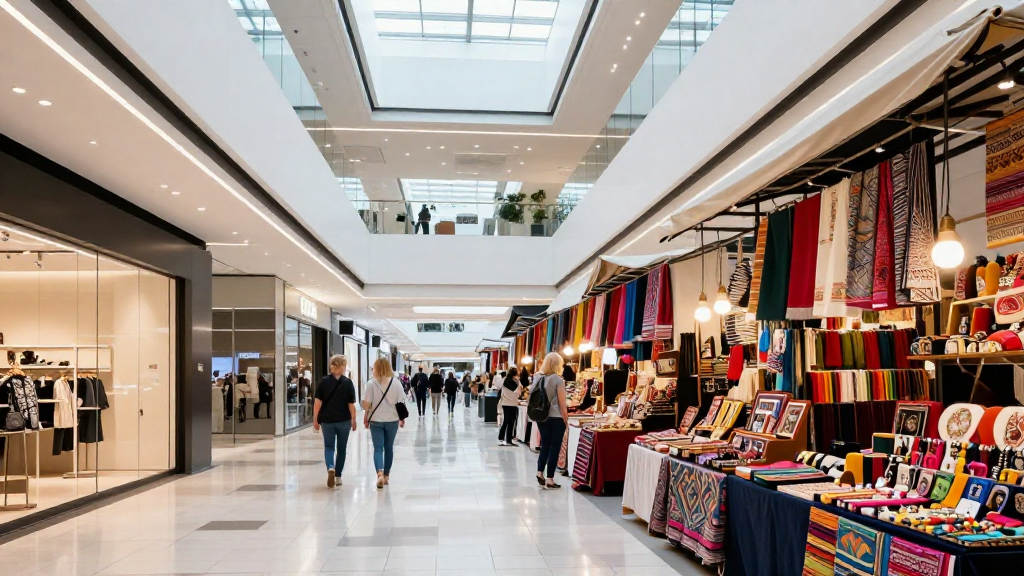
When it comes to shopping experiences, many people often ask, “What is the difference between a mall and a bazaar?”
Both offer unique atmospheres, products, and experiences.
However, they cater to different kinds of shoppers and preferences.
Let’s take a closer look at mall vs bazaar, exploring their characteristics, advantages, and disadvantages.
What Defines a Mall?
Malls are large, enclosed shopping centers often found in urban areas.
They typically feature:
- Multiple Retail Stores: Ranging from high-end brands to popular fast fashion outlets.
- Food Courts: Offering a variety of dining options.
- Entertainment Facilities: Such as cinemas and arcades.
- Parking Amenities: Ensuring easy accessibility for shoppers.
Malls usually have a standardized layout with shops arranged in a systematic manner.
What Are the Benefits of Shopping at Malls?
- Comfort: Malls are climate-controlled, making them a comfortable shopping environment regardless of weather conditions.
- Convenience: With all amenities under one roof, shoppers can find everything they need in one visit.
- Store Variety: From clothing to electronics, the sheer variety of stores is remarkable.
- Sales and Promotions: Malls commonly host seasonal sales and promotional events, adding to the shopping excitement.
What Are the Limitations?
However, shopping at a mall has its downsides:
- High Prices: Brand-name stores may come with increased prices compared to other shopping venues.
- Lack of Unique Products: Most items sold in malls are mass-produced, meaning less uniqueness.
- Crowds: Malls can become crowded, especially on weekends and holidays, leading to a hustle-bustle atmosphere.
How Does a Bazaar Differ?
On the other hand, a bazaar represents a more traditional marketplace.
These vibrant spaces often consist of stalls or small shops, usually set up in an open-air setting.
What Are the Key Characteristics of Bazaars?
Bazaars tend to feature:
- Local Goods: Unique handicrafts, traditional artworks, and local foods.
- Flexible Pricing: Many sellers offer a bargaining option, allowing for price negotiations.
- Cultural Experiences: Bazaars are often hubs of local culture, showcasing traditional foods, music, and crafts.
- Community Feel: They bring together local vendors and foster connections among the community.
What Are the Advantages of Bazaars?
- Affordability: Prices are generally lower, and the negotiation aspect can lead to better deals.
- Uniqueness: You’re likely to find one-of-a-kind items that you won’t see in a mall.
- Cultural Immersion: The experience is often rich with cultural nuances, providing insights into local traditions.
- Fresh Products: Many vendors sell fresh produce and homemade goods that are often superior in quality.
Are There Any Disadvantages?
While bazaars offer unique benefits, there are also challenges:
- Variable Quality: The quality of products can vary greatly from stall to stall.
- Weather Dependency: Open-air bazaars may be affected by inclement weather, making shopping inconvenient at times.
- Limited Operating Hours: Many bazaars operate only in the daytime and may close early.
- Fewer Entertainment Options: Unlike malls, bazaars typically lack facilities such as cinemas or play areas.
How Do Malls and Bazaars Compare in Terms of Experience?
Which Offers a Better Shopping Atmosphere?
The atmosphere in malls tends to be more structured and uniform, with controlled lighting and organized store layouts.
In contrast, bazaars offer a chaotic yet vibrant atmosphere, brimming with the sights, sounds, and smells of local culture.
What About the Shopping Experience?
At a mall, you can roam through air-conditioned corridors, shop for the latest trends, and enjoy your favorite fast food.
Bazaars, however, encourage interaction with vendors, allowing for personal connections and storytelling about products.
Where Should You Shop: A Mall or a Bazaar?
Ultimately, the choice between mall vs bazaar comes down to personal preference and the kind of shopping experience you’re seeking.
When Should You Choose a Mall?
- If you prefer brand-name shopping and variety in a climate-controlled environment.
- If you’re looking for convenience and ease of access.
- If you want to enjoy amenities like restaurants and entertainment options.
When Should You Opt for a Bazaar?
- If you prefer local goods and want to support community artisans.
- If you enjoy bargaining and discovering unique, handcrafted items.
- If you seek an immersive cultural experience during your shopping spree.
Conclusion: Mall vs Bazaar – Which is Better?
In the debate of mall vs bazaar, both shopping environments have their merits and drawbacks.
Malls are ideal for convenience, variety, and brand-centric shopping experiences.
Conversely, bazaars provide a unique opportunity to engage with local culture, enjoy unique products, and often shop at more affordable prices.
The best choice ultimately depends on what you value most in a shopping experience.
Happy shopping, whichever venue you choose!