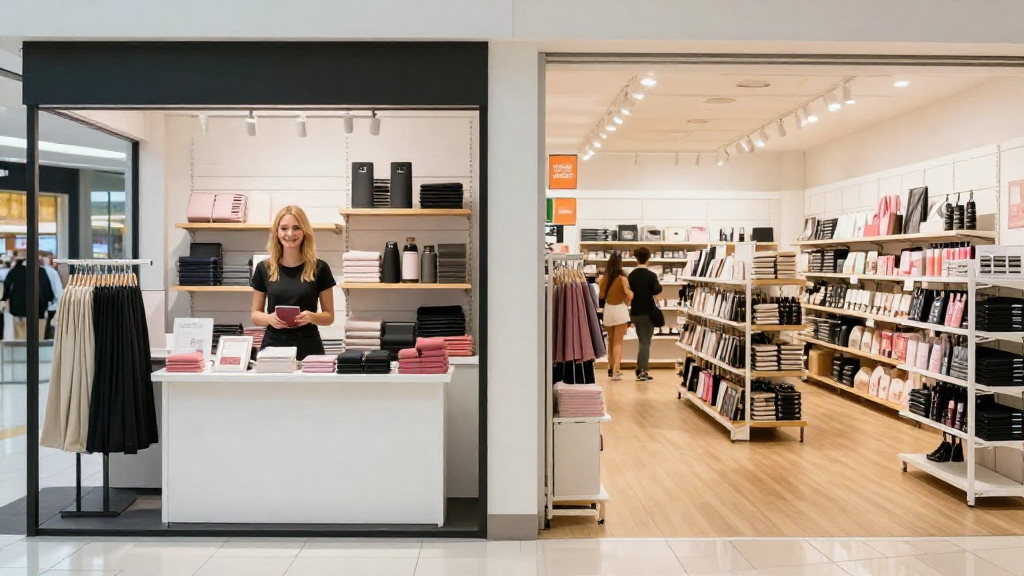
When considering retail options in busy commercial spaces, many entrepreneurs encounter the question of mall kiosk vs inline store.
This article will delve into the key differences, advantages, and disadvantages of each retail format.
What is a Mall Kiosk?
A mall kiosk is a small, often movable structure located in high foot-traffic areas within shopping malls. These kiosks are typically open on all sides and serve a variety of purposes, including:
- Retail Sales: Selling small items such as accessories, electronics, or snacks.
- Service Provision: Offering services like phone repairs or temporary tattoos.
- Promotional Opportunities: Serving as a space for events or brand promotions.
Key Features
- Size: Generally ranges from 100 to 300 square feet.
- Mobility: Can often be relocated within malls.
- Cost: Generally lower start-up costs compared to traditional stores.
- Lease Terms: Often more flexible and shorter lease agreements.
What is an Inline Store?
An inline store, in contrast, is a more traditional retail space found within the shopping mall that is fully enclosed and features its own entrance. Inline stores typically enhance the mall’s mix of retail offerings, and their characteristics include:
- Larger Space: Inline stores can range from 500 to several thousand square feet.
- Fixed Location: They remain in one place, usually set along a main corridor within the mall.
- Brand Presence: Inline stores often represent larger brands or franchises, aiming for brand consistency and enhanced visibility.
Key Features
- Size: More spacious than kiosks, providing a broader display area.
- Fixed Operational Hours: Usually follow mall hours, which could be more consistent.
- Longer Lease Terms: Often secure longer commitments, which can entail greater stability.
- Brand Experience: Offers a more immersive shopping experience.
How Do Costs Compare?
When examining mall kiosk vs inline store, it’s essential to consider the financial implications.
Startup Costs
- Mall Kiosk:
- Lower initial investment.
- Typically requires a smaller inventory.
-
Furniture and Fixtures: Minimal costs; often just counters and display racks.
-
Inline Store:
- Higher initial setup and decor costs.
- Larger inventory requirements, necessitating more upfront capital.
- Furniture and Fixtures: Includes store fixtures, signage, and possibly renovations.
Operating Costs
- Mall Kiosk:
- Generally lower operating costs.
-
Flexible staffing options, often requiring fewer employees.
-
Inline Store:
- Higher operational expenses due to larger space and higher staffing needs.
- Costs associated with utilities, security, and maintenance are typically greater.
What Are the Advantages and Disadvantages?
Understanding the pros and cons of each format is vital for making an informed decision.
Advantages of Mall Kiosks
- Lower Risk: Less capital tied up initially, allowing for quick entry into the market.
- Testing Ground: Perfect for testing new products or concepts with limited financial exposure.
- High Foot Traffic: Positioned in areas with high foot traffic, providing visibility and exposure to potential customers.
Disadvantages of Mall Kiosks
- Limited Space: Reduced ability to display a large variety of products.
- Less Brand Identity: Often competing with other kiosks in close proximity, which can dilute brand identity.
- Regulatory Restrictions: Many malls have restrictive policies regarding sales operations and hours.
Advantages of Inline Stores
- Brand Building: Better designed space allows for branding opportunities and customer engagement.
- Greater Inventory Options: The ability to stock a larger, more diverse inventory enhances the shopping experience.
- Stable Presence: Establishes an established reputation and customer loyalty over time.
Disadvantages of Inline Stores
- Higher Expenses: Requires significant financial commitment, including rent and renovations.
- Less Flexibility: Difficulty to relocate or make quick changes in response to market trends.
- Longer Commitment: Lease obligations can be daunting, especially in uncertain economic climates.
Which Option is Right for You?
Determining the best option between mall kiosk vs inline store largely depends on your business goals, target market, and available resources.
Considerations Before Deciding
- Product Type: Does your product lend itself better to impulse buying (kiosk) or requires more selling space and experience (inline)?
- Budget: Are you prepared to handle the higher costs associated with inline stores, or do you prefer the lower-cost entry point of a kiosk?
- Brand Strategy: Is your focus on building a brand presence or experimenting with different products in the market?
- Market Research: Analyze foot traffic data and customer demographics to best position your store.
Conclusion
In summary, the mall kiosk vs inline store debate boils down to your business’s unique needs.
A kiosk can be an excellent choice for entrepreneurs aiming for lower risk and flexible terms.
On the other hand, inline stores serve those looking to establish a long-term brand presence, with greater space and visibility but at higher costs.
Ultimately, both kiosk and inline store formats can succeed in their respective niches.
Careful consideration of your goals, target customers, and financial capacity will guide you toward the right choice.
No matter which option you choose, understanding your market and aligning your business strategy accordingly is key to achieving retail success.