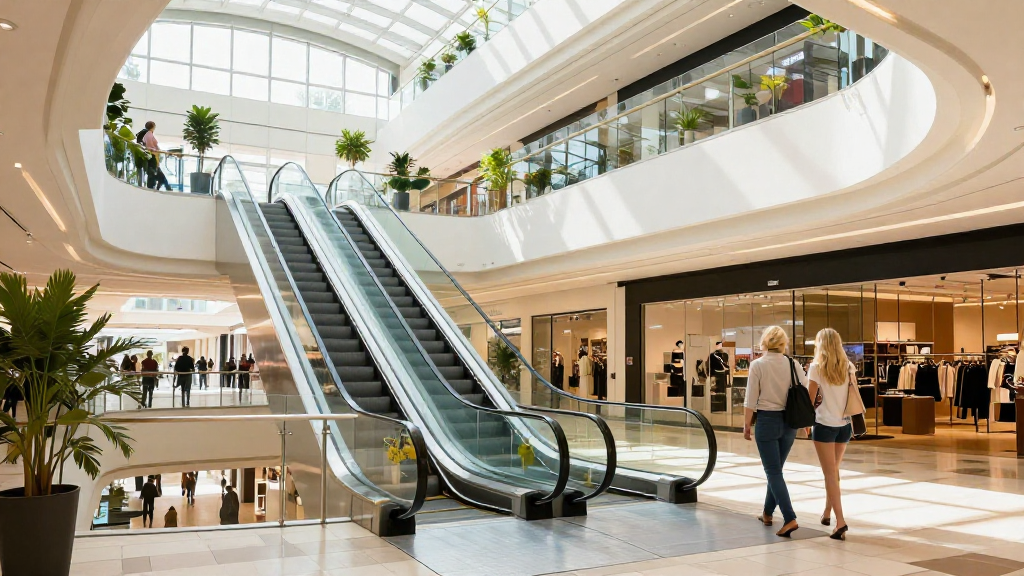
Shopping malls have long served as essential hubs of commerce, leisure, and community interaction.
In this article, we will explore how shopping malls evolved over the years, examining the key factors that have shaped their transformation.
What Are Shopping Malls?
Shopping malls are large retail complexes that typically house multiple stores, restaurants, and recreational areas.
They can range from small plazas with a handful of shops to expansive outlets featuring hundreds of brands.
Key Features of Shopping Malls:
- Diverse Retail Options: A variety of stores including clothing, electronics, and specialty shops.
- Food Courts: Facilities offering various dining options, from fast food to sit-down restaurants.
- Recreational Areas: Spaces for entertainment such as cinemas, play zones, and event areas.
- Access and Convenience: Often located near public transport and equipped with ample parking.
When Did Shopping Malls First Appear?
To understand how shopping malls evolved, we need to look back at their roots.
The concept of a mall can be traced back to ancient Greece, where the Agora served as a marketplace for commerce and social interaction.
Modern Shopping Malls: A Historical Overview
-
The 1950s-1960s: Birth of the Modern Mall
– The first enclosed shopping mall was Southdale Center in Edina, Minnesota, which opened in 1956.
– It featured a climate-controlled indoor shopping experience, setting a trend for future mall developments. -
The 1970s-1980s: Golden Age
– Malls became symbols of consumerism during this era, with iconic designs like the multi-level shopping complex and expansive parking lots.
– Major chains like Sears, JCPenney, and Macy’s led the retail landscape. -
The 1990s: Expansion and Specialization
– Malls began to incorporate themed design and diversified retail formats, including upscale boutiques and outlet stores.
– Entertainment facilities, such as arcades and multiplex cinemas, became popular additions. -
The 2000s: Challenges and Adaptation
– The rise of online shopping marked a turning point for shopping malls.
– Many traditional retailers struggled, leading to a wave of store closures.
– In response, malls began to offer experiential shopping, focusing on creating unique experiences that couldn’t be replicated online.
How Have Shopping Malls Adapated to Change?
What Changes Have Influenced Malls Today?
In considering how shopping malls evolved, the following factors have significantly influenced their transformation:
-
Technological Advancements
– With the advent of mobile technology and e-commerce, malls had to adapt to new consumer behaviors.
– Features like mobile apps, free Wi-Fi, and online shopping integrations enhance the shopping experience. -
Cultural Shifts
– Younger generations favor experiences over material goods, prompting malls to introduce entertainment and social spaces. -
Sustainability Pressures
– Increasing awareness of environmental issues has led malls to prioritize sustainable practices in both design and operations.
– Eco-friendly features such as green roofs, energy-efficient lighting, and recycling programs are becoming standard.
What Are the Future Trends in Shopping Malls?
As we look ahead, how shopping malls evolved will continue to be a dynamic process shaped by consumer trends and societal needs.
Key Future Trends to Watch:
-
Mixed-Use Developments
– Malls are likely to become more than just shopping destinations.
– Many are incorporating residential spaces, offices, and recreational facilities to create vibrant communities. -
Focus on Experiences
– Shift towards offering unique experiences, such as immersive art installations, pop-up shops, and health and wellness centers will draw visitors. -
Community Engagement
– Malls increasingly aim to be integral parts of their communities.
– Hosting local events, farmers’ markets, and cultural festivals fosters connections between the mall and its surrounding area. -
Technological Integration
– Advancements in technology will play a major role in enhancing customer experiences.
– Augmented reality (AR) and virtual reality (VR) shopping experiences may become commonplace.
How Are Malls Transforming to Stay Relevant?
What Strategies Are Effective?
To remain competitive, shopping malls are adopting innovative strategies focusing on how shopping malls evolved based on consumer preferences.
-
Personalization
– Using data analytics to understand shopping behaviors allows malls to tailor marketing efforts and promotions. -
Enhanced Safety Measures
– Particularly in a post-pandemic world, implementing strict health and safety protocols ensures shopper confidence.
– This includes regular sanitation, crowd control measures, and social distancing guidelines. -
Strengthening Local Businesses
– Collaboration with local artisans and businesses encourages community support, diversifying mall offerings. -
Flexible Spaces
– Adapting physical spaces that can be easily transformed for various events and uses increases versatility and appeal.
Conclusion: The Future of Shopping Malls
From their inception to their ongoing evolution, shopping malls continue to serve as vital centers for commerce and community interaction.
How shopping malls evolved reflects broader societal trends and consumer behavior changes.
As they adapt to modern realities and embrace innovation, shopping malls will likely continue to thrive, maintaining their status as social and economic hubs for years to come.
The future looks promising, with a focus on experiences, sustainability, and community engagement likely guiding their transformation.
With these evolving dynamics, one thing is certain: shopping malls will forever adapt to meet the changing needs and desires of their patrons.