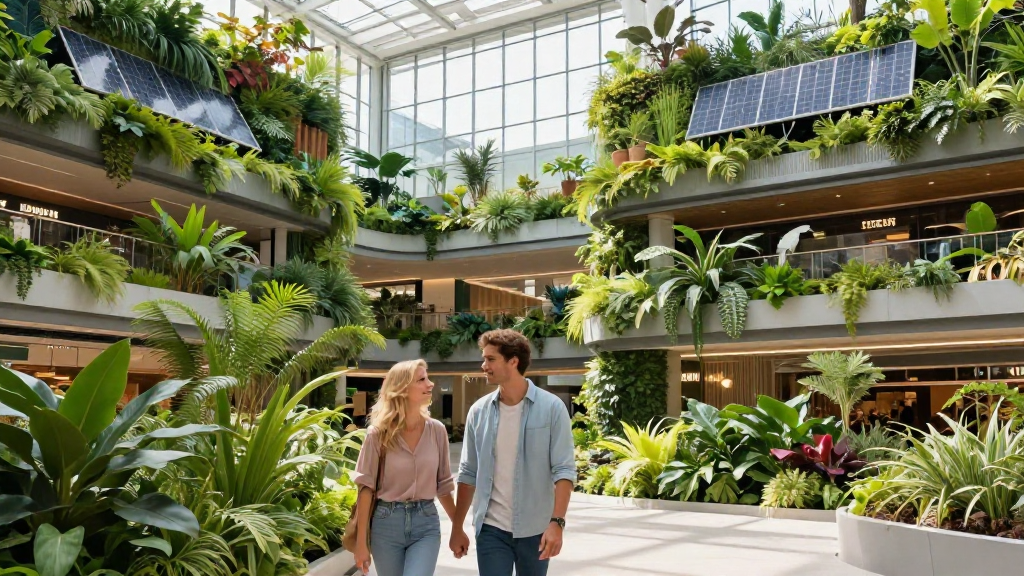
In recent years, the green malls concept has emerged as an innovative approach to retail spaces.
As environmental consciousness grows, these eco-friendly shopping centers aim to redefine consumer habits and reduce the environmental impact of retail.
But what exactly does the green malls concept entail?
What Are Green Malls?
Green malls are retail spaces designed with sustainability in mind.
They integrate eco-friendly practices and technologies to minimize their carbon footprint.
Key characteristics of green malls include:
-
Energy Efficiency:
Utilizing renewable energy sources such as solar panels and wind turbines to power the facility. -
Sustainable Materials:
Employing construction materials that are recycled or sourced from sustainable locations. -
Water Conservation:
Implementing systems that recycle water, as well as fixtures that save water, such as low-flow faucets and toilets. -
Green Spaces:
Incorporating parks and gardens within or around the mall to enhance biodiversity and provide a natural ambiance for visitors. -
Transportation Solutions:
Offering convenient public transport access, bike racks, and electric vehicle charging stations to encourage eco-friendly commuting.
How Does the Green Malls Concept Benefit the Environment?
The green malls concept presents various benefits for the environment.
These benefits go beyond reduced energy consumption; they also foster a healthier community. Some notable advantages include:
-
Reduced Carbon Emissions:
By utilizing renewable energy sources and promoting energy-efficient practices, green malls significantly reduce greenhouse gas emissions. -
Waste Reduction:
Green malls often have waste management systems in place, including composting and recycling initiatives, to minimize landfill contributions. -
Biodiversity Enhancement:
The integration of natural habitats and gardens supports local wildlife.
This contributes to maintaining biodiversity in urban areas. -
Community Engagement:
By creating sustainable spaces, green malls encourage community involvement in environmental initiatives.
They may host events, workshops, or farmer’s markets focused on sustainability.
What Makes Green Malls Different From Traditional Malls?
The green malls concept diverges from traditional malls in several significant ways.
Below are some defining differences:
-
Design Philosophy:
Green malls prioritize sustainable designs over mere aesthetics.
Traditional malls often focus solely on maximizing retail space and visual appeal. -
Environmental Commitments:
While many traditional malls may take minimal measures towards sustainability, green malls actively engage in environmentally friendly practices as part of their core operations. -
Consumer Experience:
Green malls aim to create a shopping experience that connects consumers with nature.
Traditional malls generally lack this ecological focus.
The presence of green spaces, gardens, and outdoor seating areas is a hallmark of green malls.
What Role Do Green Certifications Play?
Certifications such as LEED (Leadership in Energy and Environmental Design) or BREEAM (Building Research Establishment Environmental Assessment Method) enhance the green malls concept by emphasizing reliability and accountability in sustainability practices.
These certifications help by:
-
Standardizing Practices:
They offer a framework for evaluating the sustainability of buildings. -
Assuring Consumers:
Certifications provide assurance to consumers that a facility adheres to environmentally friendly practices. -
Incentivizing Improvements:
Many developers are motivated to pursue green certifications to gain recognition and incentives.
This leads to a broader adoption of sustainable practices.
How Are Retailers Evolving Through the Green Malls Concept?
Retailers are adapting to the green malls concept in various ways to align their brands with sustainability.
This evolution manifests through:
-
Eco-Friendly Product Lines:
Many retailers are increasing the availability of sustainable products.
This appeals directly to environmentally conscious consumers. -
Reduction of Packaging Waste:
Efforts are being made to minimize packaging or shift towards biodegradable materials. -
Sustainable Practices:
Retailers are also adopting energy-efficient practices within their stores, such as LED lighting and reducing water usage. -
Investment in Local Communities:
Many brands are engaging with local suppliers and artists to minimize transportation emissions and support their communities.
What Are Examples of Successful Green Malls?
Several existing malls epitomize the green malls concept, showcasing its viability and success:
-
The Crystals at CityCenter, Las Vegas:
This luxury mall features numerous eco-friendly design elements, including solar panels and electric car charging stations. -
Westfield Sunrise, New York:
The mall incorporates green roofs and water conservation systems, demonstrating a commitment to sustainability. -
St. Louis Galleria, Missouri:
Features include an innovative stormwater management system and energy-efficient technologies.
These examples illustrate how the green malls concept is being realized across various markets.
They inspire other developers to follow suit.
How Can Consumers Support the Green Malls Concept?
Consumers can play a significant role in promoting the green malls concept.
Here are some practical steps individuals can take:
-
Shop at Green Retailers:
Choose stores that offer sustainable products or demonstrate environmentally friendly practices. -
Participate in Community Events:
Attend workshops, farmers’ markets, and events hosted by green malls to foster community and sustainability awareness. -
Advocate for Sustainability:
Support local municipalities and initiatives that promote sustainable urban development. -
Provide Feedback:
Communicate with mall management about sustainability initiatives and express preferences for eco-friendly practices.
Conclusion: The Future of Green Malls
The green malls concept not only serves as an innovative approach to retail but also embodies a fundamental shift towards sustainable living.
With increasing awareness and necessity for environmental consciousness, the role of green malls in urban development is likely to grow.
By marrying consumer needs with sustainability, green malls offer a viable solution to the challenges posed by traditional retail spaces.
As more consumers become environmentally conscious, the popularity of the green malls concept will undoubtedly rise.
Together, communities can foster a sustainable shopping experience that benefits both people and the planet.